Articles
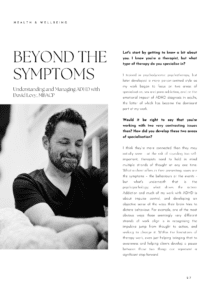
Interview with ADHD Counselling UK founder David Levy MBACP
Beyond the Symptoms: Understanding and Managing ADHD ADHD Counselling UK founder David Levy MBACP sat down with journalist Stephen Jameson to discuss ADHD, counselling, and the role of specialist support before, during and after diagnosis. Let’s start by getting to know a bit about you. I know you’re a therapist, but what type of therapy…
Continue Reading Interview with ADHD Counselling UK founder David Levy MBACP
Increasing ADHD Diagnoses Among UK Men: A Growing Trend
Recent research conducted at University College London reveals a significant surge in ADHD diagnoses in the UK over the past two decades, especially among men. ADHD, a condition characterized by symptoms such as impulsiveness, disorganization, poor time management skills, difficulty focusing, and restlessness, can have a profound impact on daily life. The study, which analysed…
Continue Reading Increasing ADHD Diagnoses Among UK Men: A Growing Trend
Report: Medicines Used in Mental Health (England 2022/23)
The NHS Business Services Authority have released their yearly report on medicines used in mental health in England in the 2022/23 financial year. Key Information: There were 86 million antidepressant items prescribed in 2022/23, to an estimated 8.6 million identified patients. This was an increase of around 2%, or 200,000 more identified patients than 2021/22.…
Continue Reading Report: Medicines Used in Mental Health (England 2022/23)
Katie Price’s ADHD Diagnosis Revealed
Behind the glamour of celebrity life, there are often untold stories of personal struggles. In a recent revelation, media icon Katie Price opened up about her own battle with Attention Deficit Hyperactivity Disorder (ADHD). ADHD is a complex neurodevelopmental disorder characterised by persistent patterns of inattention, hyperactivity, and impulsivity. While often associated with children, it…
ADHD and Book Recommendations: Know Your Audience
So, you’ve probably heard the advice that reading books can help improve focus and expand knowledge. But here’s the thing: recommending long books to ADHD-ers is like recommending snow to a thirsty camel – sure, but how? In this article, we’ll dive into the challenges faced by people with ADHD when it comes to concentrating…
Continue Reading ADHD and Book Recommendations: Know Your Audience
Does ADHD exist? (Hint: yes)
Defining the existence of something typically involves assessing its presence or reality based on various factors such as evidence, observation, consensus, and coherence within a given framework. The specific criteria for determining existence may vary depending on the context, whether it is a physical entity, an abstract concept, or a subjective experience. In science, existence…
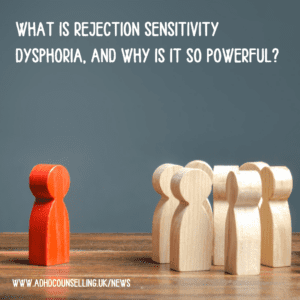
What is rejection sensitivity dysphoria and why is it so powerful?
Rejection Sensitivity Dysphoria (RSD) is a psychological phenomenon characterized by an intense and overwhelming fear of rejection, criticism, or disapproval from others. While not officially recognized as a standalone disorder in the Diagnostic and Statistical Manual of Mental Disorders (DSM-5), RSD is commonly associated with attention-deficit/hyperactivity disorder (ADHD) and other mental health conditions. It is…
Continue Reading What is rejection sensitivity dysphoria and why is it so powerful?
ADHD-iction: The Connection Between Attention and Addiction
Attention-Deficit/Hyperactivity Disorder (ADHD) and addiction are two prevalent and interconnected conditions that significantly impact individuals worldwide. ADHD is a neurodevelopmental disorder characterized by persistent inattention, hyperactivity, and impulsivity. Addiction, on the other hand, refers to the chronic and compulsive engagement in rewarding stimuli despite adverse consequences. Although ADHD and addiction are distinct clinical entities, an…
Continue Reading ADHD-iction: The Connection Between Attention and Addiction
Panorama Drama: Private ADHD Diagnosis Explained
BBC’s ‘Panorama’ episode – airing Monday 15th May 2023 with a revised title ‘Private ADHD Clinics Exposed’, which replaces its original more sensationalist title ‘The ADHD Scandal’ – has drawn considerable attention before air, with reactions ranging from panic to anger, to concern that the programme will further exacerbate an already sizable scepticism about the…
Continue Reading Panorama Drama: Private ADHD Diagnosis Explained
City of London Police Takes the Lead in Screening Suspects for ADHD
The City of London Police has become the first police force in the country to implement a screening process for detainees in custody to identify Attention Deficit Hyperactivity Disorder (ADHD). The screening checklist, created by qualified counsellor and therapist Sarah Templeton, aims to ensure that individuals with urgent cases are fast-tracked to an NHS provider…
Continue Reading City of London Police Takes the Lead in Screening Suspects for ADHD
Recommended Reading,
Please note: ADHD Counselling UK may earn a small affiliate commission from books sold. ADHD 2.0: New Science and Essential Strategies for Thriving with Distraction by Edward M. Hallowell and John J. Ratey All Dogs Have ADHD by Kathy Hoopmann Help for Women with ADHD: My Simple Strategies for Conquering Chaos by Joan Wilder Better Late…
Seeing Clearly: Why ADHD Medication Deserves a New Lens
When it comes to treating ADHD, medication is often prescribed. But there’s been some debate over the years about whether the term “medication” is the most appropriate way to refer to these drugs. Some people think that a new name, more akin to glasses or hearing aids, would be better. So why do some people…
Continue Reading Seeing Clearly: Why ADHD Medication Deserves a New Lens
Another Day Haphazardly Done
When my wife Abi first suggested to me over dinner that she might have ADHD, I was more than a little sceptical. We’d been having some problems and Abi would often look to pass responsibility to a ‘thing’. This was the latest, and to me ADHD was something that hyperactive kids had, not fully-grown adults…
The ODD Couple
As someone who has struggled with Oppositional Defiant Disorder (ODD), I know first-hand the impact this condition can have on a person’s life. ODD is a behaviour disorder that is characterized by ongoing patterns of disobedient, hostile, and defiant behaviour towards authority figures. For me, this often manifested as arguing with teachers and parents, refusing…
Get Your Shoes on and Focus Up! How Wearing Shoes Indoors Increases Productivity and Focus for ADHD-ers.
25th March 2023By Grace Morse I know what you might be thinking – well, we’ve had just about every kind of article and think-piece about ADHD by now, it was inevitable at some point we were going to arrive at “have you tried shoes?” Now before you click back to the other seventeen things you…
ADHD: An Adult Problem
15th September 2022By Sam T. When you think of ADHD, there is a good chance that you will associate it with being a disorder that impacts younger children. While many of the new diagnoses are related to children, as, of course, they are picked up at school, many diagnosed with ADHD (or who suspect this…

How Honey Ross proves the importance of ADHD diagnosis
13th September 2022By Sam T. How Honey Ross proves the importance of ADHD diagnosis We may think that ADHD is only diagnosed in early life, as a child, but the truth is that more and more adults are being diagnosed with ADHD in their later life. A recent example of this comes from Jonathan Ross’…
Continue Reading How Honey Ross proves the importance of ADHD diagnosis
The Great ADHD Quiz
Designed for ADHDers and non-ADHDers alike, this test will help you better understand ADHD, its symptoms, and its affects. The quiz is all multiple choice questions, and you get your score at the end. Thanks for playing!
Results


#1. True or False: ADHD is a Learning Disability
This is False.
ADHD does not affect a person’s ability to learn skills such as reading, writing or mathematics, although some of the effects of ADHD, such as difficulty focussing, can cause challenges in learning.
ADHD is categorised as a neurodevelopmental disorder, a term given to a group of disorders which affect development of the nervous system and lead to abnormal brain function, and may affect emotion, learning ability, self-regulation and memory.
#2. Research suggests ADHD is caused by…
Select all that apply:
Brain Structure and Function
Extensive research has shown clear structural differences in the ADHD brain, specifically focussing on brain size in people with ADHD, (more-so in ADHD children than ADHD adults) including the hippocampus and amygdala – the areas responsible for emotional processing and impulsivity.
Decreased blood flow has been observed to various areas of the brain in those with ADHD, indicating decreased brain activity. This differential in brain function is particularly observed in the prefrontal cortex, the area of the brain responsible for many tasks including cognitive control, attention and perseverance.
Environment
A common misconception is that nature and nurture have an equal role to play in the development of ADHD.
ADHD is not caused by issues in the home, or more common in troubled children.
That said, exposure to some chemicals or substances has been shown to have a link to the development of the condition, particularly with environmental toxins such as mercury, lead or pesticides.
Food Additives
Although evidence exists to connect consumption of food additives – more commonly referred to as ‘E Numbers’ – with hyperactivity and so some ADHD-like symptoms in children, there is no evidence to suggest that they actually cause ADHD.
Genetics
Evidence overwhelmingly suggests a genetic link in ADHD, with National Institute of Health (NIH) research showing that one third of fathers who have or had ADHD will have children with the condition.
Other research has shown that a child with ADHD is four times more likely than someone without ADHD to have a family member with the condition.
Immunisations
There is no evidence that vaccines cause ADHD. Evidence published in 1998 linking vaccines to Autism and ADHD were based on falsified data, for which the author lost his medical licence due to multiple conflicts of interest, and the paper was later withdrawn.
Premature Birth
Children born at 33 weeks or earlier have been shown in a wide-ranging study to be more likely to show symptoms of ADHD. It should be said, however, that this study did not later identify which, if any, of the participants were later diagnosed.
The link between premature birth and ADHD is more likely linked to the development of the brain.
Screen Time
Although exposure to screen time (such as televisions, mobile phones, or tablet computers) has been shown to negatively impact the development of attention in those 18 months and younger, the same research has similarly shown the positive effect of educational programming for cognitive, literacy and social outcomes in those 24 months and above.
There is no evidence to support a claim that you are more likely to develop ADHD as a result of spending too much time staring at a screen.
Sugar
No evidence exists to definitively link sugar with causing ADHD.
Consumption of sugar is however likely to cause an increase in the symptoms of ADHD in children. In later life, people with ADHD have been shown to have a significantly higher rate of excessive consumption of stimulant food and drink, including sugar.
Use of Alcohol or Nicotine During Pregnancy
With clear links between the healthy development of foetuses and alcohol use and/or smoking already long-established, research has subsequently shown ADHD development risk is 1.55 times higher in children of mothers who consume alcohol, and 2.64 higher if the mother smokes.
Video Games
This may surprise some, but the playing of video games, even to excess, does not cause ADHD.
That said, the nature of video games – an escape from reality, instant reward and visual stimulation, among others – are very appealing to the ADHD brain.
Additionally, video games can particularly help people with ADHD develop essential skills such as hand-eye coordination, strategy and problem solving, planning and prioritising, collaboration and time management.
#3. Likely symptoms of ADHD include…
Select all that apply:
All of the above are considered symptoms of ADHD, with the exception of lack of motivation.
In fact, behaviours associated with laziness or lack of motivation are likely to be anything but; motivation, creativity and intent are as present (if not more so) in ADHD people as those without the condition. However, the corrosive accumulation of repeated negative experience and the disconnect between intent and action may give the appearance of lacking drive or interest, but could be more accurately described as being ‘worn down’.
#4. True or false: we all have symptoms of ADHD
#5. Therefore, we could all be diagnosed with it
Although the individual components of ADHD are present and recognise able in most of us at one time or another, the criteria for an official diagnosis are vastly different to saying, for example, “we all get distracted sometimes”.
The difference is one of chronic behaviour; a rule rather than an exception.
To be officially diagnosed with ADHD, the person must display six or more of the listed nine characteristics of inattention, or six or more of the nine characteristics of hyperactivity and impulsivity.
In addition to this, conditions must be met that evidence:
- That these symptoms were present before the age of 12
- That symptoms were present in two or more settings – such a home, work, or with friends or in relationships
- That the symptoms clearly impair the quality of social, school or work functioning
- That the symptoms are not better explained by another mental disorder, such as anxiety or a personality disorder.
Following the successful meeting of these criteria, one of three diagnoses can be given:
- Predominantly Hyperactive-Impulsive Presentation
- Predominantly Inattentive Presentation
- Combine Presentation
#6. Is ADHD more common in men than in women?
The answer (technically) is yes.
However, with research historically focussed on men and boys, the statistics are skewed. What we also know is that women and girls are far more likely to be mis-diagnosed with another condition, and are less likely to display the disruptive external symptoms in childhood.
#7. True or false: Men and boys are three times as likely to be diagnosed with ADHD than women and girls?
This is true.
A 2015 research study in the UK of more than 10,000 children aged 5-15 found that 3.62% of boys had ADHD, while 0.85% of girls had the condition.
#8. The national average wait time for an ADHD assessment via the NHS is…
The current wait time for a diagnosis via the NHS is in excess of two years, and growing, with wait times in some parts of the UK as high as five years.
The ‘Right to Chose’ pathway (see here) can cut this wait time significantly.
#9. Which of the following conditions are associated with ADHD
Select all that apply:
More than two-thirds of people with ADHD have at least one other co-morbid condition.
Those diagnosed in adulthood will likely have lived a life full of challenges and difficulty, and feelings of anxiety, self-doubt, isolation and lacking self-esteem are extremely common, in addition to any number of other diagnosable conditions.
Rejection Sensitivity Dysphoria (RSD)
An extreme sensitivity to rejection or the even just the possibility of rejection, people with RSD in addition to their ADHD often over-compensate in their relationships in order to make people like and admire them.
Episodes of RSD are normally short and extremely powerful and those that have it report feeling easily embarrassed, have angry outbursts when they feel rejected, have low self-esteem, suffer with social anxiety, have issues in personal relationships, and are more prone to self-harming behaviours.
Misophonia
A condition in which the involuntary exposure to certain sounds trigger emotional or psychological responses which may be viewed as inappropriate to the situation in which they’re experienced. Sometimes referred to as Sound Sensitivity Syndrome, those with the condition may suffer from reactions such an angry outbursts, panic attacks, or a need to flee the source of the sound.
Oppositional Defiance Disorder (ODD)
More commonly diagnosed in childhood than present in adulthood (but nonetheless, a significant portion of adults continue to display symptoms of the disorder), ODD refers to a recurring pattern of involuntary negative, defiant and hostile behaviours towards figures of perceived authority. ODD differs from the similar Conduct Disorder (CD), a condition also associated with ADHD, but whose symptoms express more extremely – physical aggression towards people or animals, lying, stealing or destruction of property.
#10. True or False: ADHD can be cured
There is no cure for ADHD.
However, it is considered a highly treatable disorder.
Those who receive the right diagnosis and follow an appropriate treatment plan – for example a combination of therapy, medication and symptom management – can live comfortably, without their condition negatively impacting their lives.
Real Housewives of Cheshire star Tanya Bardsley talks about her ADHD
by Laura Youngman Last week, ITVBe announced a new four-part series of female-fronted health documentaries, including a highly personal episode from Real Housewives of Cheshire star Tanya Bardsley detailing her experience of being diagnosed with ADHD at the age of 40. Tanya is set to talk candidly about how she has dealt with various mental…
Continue Reading Real Housewives of Cheshire star Tanya Bardsley talks about her ADHD
The Frame
The Frame – Issue 01 Jam-packed with articles and poetryQ&A with Psychotherapist and author Katy LeesPodcast and book recommendations …and much more! Click the logo to read or download (PDF) or click https://tinyurl.com/framefanzine Click the Issuu logo to read magazine-style on Issuu, or click https://issuu.com/framefanzine Issue 02 – Women and Mental Health Out 2nd January…
ADHD and Recovery
adhd and recovery Contact To register for the ADHD and recovery group, please use the contact box to send an email and be added to the group.